Speech recognition models process speech picked up by microphones (illustrative photo, not directly related to IBM). Photo: Panos Sakalakis; source: Wikimedia Commons; license: CC BY 2.0.

On October 21, 2026, IBM published an update to its Granite Speech models on the Hugging Face blog. It added granite-speech-5.0-2b and updated two existing models, Turbo CTC and 4.1 2B Plus. All three are released under the Apache 2.0 license. On the Open ASR Leaderboard's English short-form audio benchmark, 5.0 2B has an average word error rate of 5.06%. By the leaderboard data, that places it 8th overall and 2nd among open-weight models, but the ranking mixes averages taken over different numbers of test sets.
What Was Released and What Each Model Is For
IBM's Granite speech team produced the release, and the blog byline includes researchers such as George Saon and Brian Kingsbury. The blog gives each of the three models a use case. 5.0 2B is for high-accuracy multilingual transcription and translation. Turbo CTC is for high-throughput and on-device transcription. 4.1 2B Plus is for multi-speaker recordings such as meetings and phone calls. The dates do not fully agree. The blog is dated October 21, but the 5.0 2B model card says October 20, and the discussion on the leaderboard PR shows the model was still not public on October 17. Which date counts as the official public release has yet to be verified.
| Model | Status in this release | Parameter size | Supported languages | Main tasks |
|---|---|---|---|---|
| granite-speech-5.0-2b | New release (model card date 2026-10-20) | Named 2B; listed as 2.31B in leaderboard data | Transcription: English, French, German, Spanish, Portuguese, Japanese; translation: between each of these languages and English, plus English-to-Italian and English-to-Chinese | Speech recognition, speech translation, keyword biasing (up to 2000 words), punctuation and capitalization output on prompt |
| granite-speech-5.0-470m-turboctc | Multilingual update (2026-10-21; English version first released 2026-08-25) | 470 million | English, French, German, Spanish, Portuguese, Italian, Japanese | Speech recognition only; outputs punctuation and capitalization directly |
| granite-speech-4.1-2b-plus | Weight update (first released 2026-04-28, updated 2026-10-19) | Named 2B; same architecture as 4.1 2B; exact parameter count yet to be verified | English, French, German, Spanish, Portuguese | Speech recognition, speaker-attributed transcription, word-level timestamps, keyword biasing; no punctuation or capitalization output |
The information in the table comes from the three official model cards, and all three models are licensed under Apache 2.0. Note that "Attribute" (speaker attribution) in the blog title refers to a capability of 4.1 2B Plus; the 5.0 2B model card does not list speaker labeling. 5.0 2B uses an intermediate checkpoint of granite-4.0-1b-base as its language model backbone. It was trained on about 390,000 hours of public audio, plus synthetic data created for Japanese recognition, keyword biasing, and translation. The model card recommends cutting long recordings into segments of about 2 minutes or less before transcription.
Results Reported by IBM
All figures in this section come from IBM's blog and model cards and are officially reported results. For 5.0 2B, the blog says its average word error rate (WER, lower is better) on the Open ASR Leaderboard's English short-form public test sets is 5.06%, which ranked 2nd among open-weight models as of October 21, 2026. For punctuation and capitalization, the blog says capitalization F1 ranges from 89.7 to 99.5. However, the model card table lists 5.0 2B's values as 90.16 to 99.51, and 89.71 is actually the score of the previous-generation 4.1 2B. Punctuation error rate went down on 7 of 9 test sets and rose slightly on CommonVoice English and French. Results for noisy and far-field conditions (the FFASR leaderboard), multilingual recognition, and speech translation appear only as charts in the model card. This article could not read the exact values, so they have yet to be verified.
For Turbo CTC, the model card says the new multilingual version reaches an English average WER of 5.51%, better than the English-only version's 5.78%. It also notes that 5.51% is an unofficial result and that the leaderboard still lists the English-only version. The blog says the model reaches 19,870 RTFx on the leaderboard (processing speed as a multiple of the audio's real-time length), about 1.6 times the 12,600 it had at launch. In the leaderboard data read for this article, however, the entry is listed as 21,134.31. The two figures do not match, and the reason has yet to be verified.
For 4.1 2B Plus, the blog compares the old and new versions (all figures are error rates, so lower is better):
| Metric | Old version | New version |
|---|---|---|
| Speaker attribution error rate WDER | 4.40 | 4.10 |
| Error rate for transcription with speaker labels cpWER | 30.50 | 28.48 |
| Long-form audio WER | 13.53 | 10.22 |
| Keyword WER with keyword biasing (20-word list) | 11.79 | 6.48 |
| Average timestamp shift AAS (all speech) | 210.86 | 98.54 |
The per-test breakdown in the model card shows the gains are not across the board. WDER got worse on FISHER (from 0.9 to 1.0) and CALLHOME English (from 2.2 to 3.0) but improved on AMI-SDM and GALE. On the leaderboard's revised English test sets, average WER rose from 6.01% to 6.10%. The model card does not explain how the blog's summary WDER values of 4.40 and 4.10 were calculated, so this has yet to be verified.
Where It Stands on the Open ASR Leaderboard
The Open ASR Leaderboard is hosted under Hugging Face's hf-audio organization, and its result data are public in the open-asr-leaderboard-results dataset. On October 22, 2026, this article read english_short_latest.csv from that dataset. At the time, the latest commit was f3f9949, the one that added the 5.0 2B results. The English short-form leaderboard currently uses 9 public test sets: cleaned versions of AMI, Earnings22, Gigaspeech, and VoxPopuli; LibriSpeech clean and other; SPGISpeech; URGENT2024; and Voice Arena Monsoon (Indian English). The leaderboard does not state a formal methodology version number, so this has yet to be verified.
This result does not rest on IBM's word alone. On October 14, IBM researcher gsaon opened PR #245 in the leaderboard's code repository and attached run logs from Hugging Face Jobs that showed an average WER of 5.06% across the 9 test sets. On October 19, repository collaborator Deep-unlearning said in a comment that they had run the public test sets independently on an H200 and got the same 5.06%. The PR was merged on October 21 and the result went live. However, the reproduction logs were not attached to the PR, and no results on the leaderboard's private test sets have been published. Both points have yet to be verified.
When the CSV's average WER column is sorted from lowest to highest, 5.0 2B (5.06%) is 8th. Of the 7 entries above it, 6 are closed-source commercial services, and OtterAI speech-v3.1 (3.88%) is 1st. The only open-weight model among them is Microsoft's Phi-4-multimodal-instruct (5.02%, MIT license). Going by this column, the blog's claim of "2nd among open-weight models" matches the leaderboard data.
The ranking does not compare like with like, however. This article recalculated each row from the per-test-set values in the CSV and found that the average column covers different numbers of test sets. For 5.0 2B it covers all 9. Phi-4-multimodal has no URGENT2024 result, so its average covers 8. For older entries such as the previous-generation 4.1 2B and Qwen3-ASR-1.7B-hf, the listed values match the average over 7 test sets, with the two LibriSpeech test sets left out. Averaged over the same 9 test sets, Qwen3-ASR-1.7B-hf scores 4.94%, lower than 5.0 2B's 5.06%. On the 8 test sets where Phi-4-multimodal has results, 5.0 2B averages 4.42%, lower than Phi-4-multimodal's 5.02%. In other words, with a consistent method 5.0 2B is still 2nd among open-weight models, but the model ahead of it is Qwen3-ASR-1.7B-hf. Its 8th place overall also depends on the method. These figures are this article's own calculations, not the leaderboard's official ranking. Why the leaderboard mixes different methods has yet to be verified.
Compared with the previous generation on the same 9 test sets, 4.1 2B has an average WER of 5.35% and 5.0 2B has 5.06%. WER went down on 8 of the 9 test sets; only LibriSpeech other rose slightly, from 2.19% to 2.21% (this article's calculation from the CSV). The two models are about equally fast, with RTFx of 546.84 and 544.52 in the CSV, respectively. IBM reported an RTFx of 570.17 for 5.0 2B in the PR log. Whether the gap from the leaderboard figure comes from different hardware has yet to be verified.
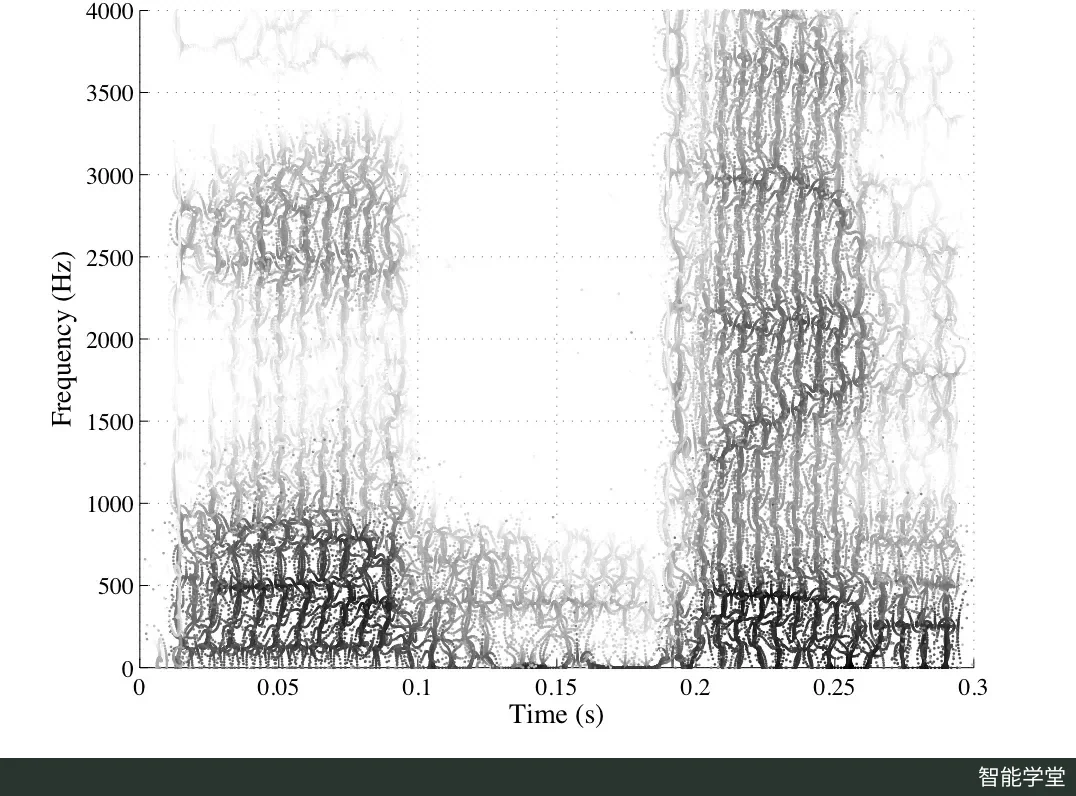
Spectrogram of the English word "open" being spoken (illustrative image, unrelated to the leaderboard data in this article). According to the Granite Speech 5.0 2B model card, its speech encoder takes log-mel spectrogram features as input, which are the same kind of time-frequency representation. Author: Kelly Fitz; source: Wikimedia Commons; license: CC BY-SA 3.0.

References
-
IBM Granite. Granite Speech 5.0: Transcribe, Translate, and Attribute more Accurately and Faster. Hugging Face Blog, 2026-10-21.
-
IBM Granite. ibm-granite/granite-speech-5.0-2b model card. Hugging Face, accessed 2026-10-22.
-
IBM Granite. ibm-granite/granite-speech-5.0-470m-turboctc model card. Hugging Face, accessed 2026-10-22.
-
IBM Granite. ibm-granite/granite-speech-4.1-2b-plus model card. Hugging Face, accessed 2026-10-22.
-
Hugging Face hf-audio. open-asr-leaderboard-results: english_short_latest.csv. Commit f3f9949, read 2026-10-22.
-
huggingface/open_asr_leaderboard. Add granite-speech-5.0-2b (PR #245). GitHub, merged 2026-10-21.
-
Smart Academy · Your own academy for the age of intelligence
-
Compiled and published by Scholay All-in-One Academic Platform. If this content infringes your rights, please let us know and it will be taken down.
-
Also published on EnterScholar, a community of scholars for the age of intelligence